

Solar panels and hail together raise a lot of questions for homeowners considering solar in Colorado Springs. With frequent summer storms and unpredictable weather, it’s smart to ask how solar panels perform during hailstorms and what kind of damage, if any, they might suffer. The good news? Most modern solar panels are designed to take a hit. Literally.
This guide breaks down how solar systems handle hail, what to expect during a storm, and how to protect your investment in a hail-prone area like Colorado Springs.
If you live in Colorado Springs, you know that hailstorms are just part of the deal. Fortunately, today’s solar panels are built with durability in mind. Most are tested and certified to withstand hail up to 1 inch in diameter traveling at up to 50 miles per hour. That’s more than enough for the majority of storms in the region.
High-quality panels feature tempered glass and strong aluminum framing to absorb and deflect impact. While solar hail damage is possible during extreme events, it’s uncommon when panels are properly installed with local conditions in mind.
You might be wondering how panels actually respond during a storm. Here's what usually happens:
Hail: Panels may get cosmetic damage like surface marks, but cracking is rare unless hailstones are large. When cracks do happen, they typically affect just one or two panels and not your whole system.
Wind: Panels are mounted securely to withstand strong winds, but improper installation or a weak roof can increase the risk of uplift.
Most damage, if it occurs, is isolated and fixable. Systems are modular, so you can replace a single panel without impacting the rest.
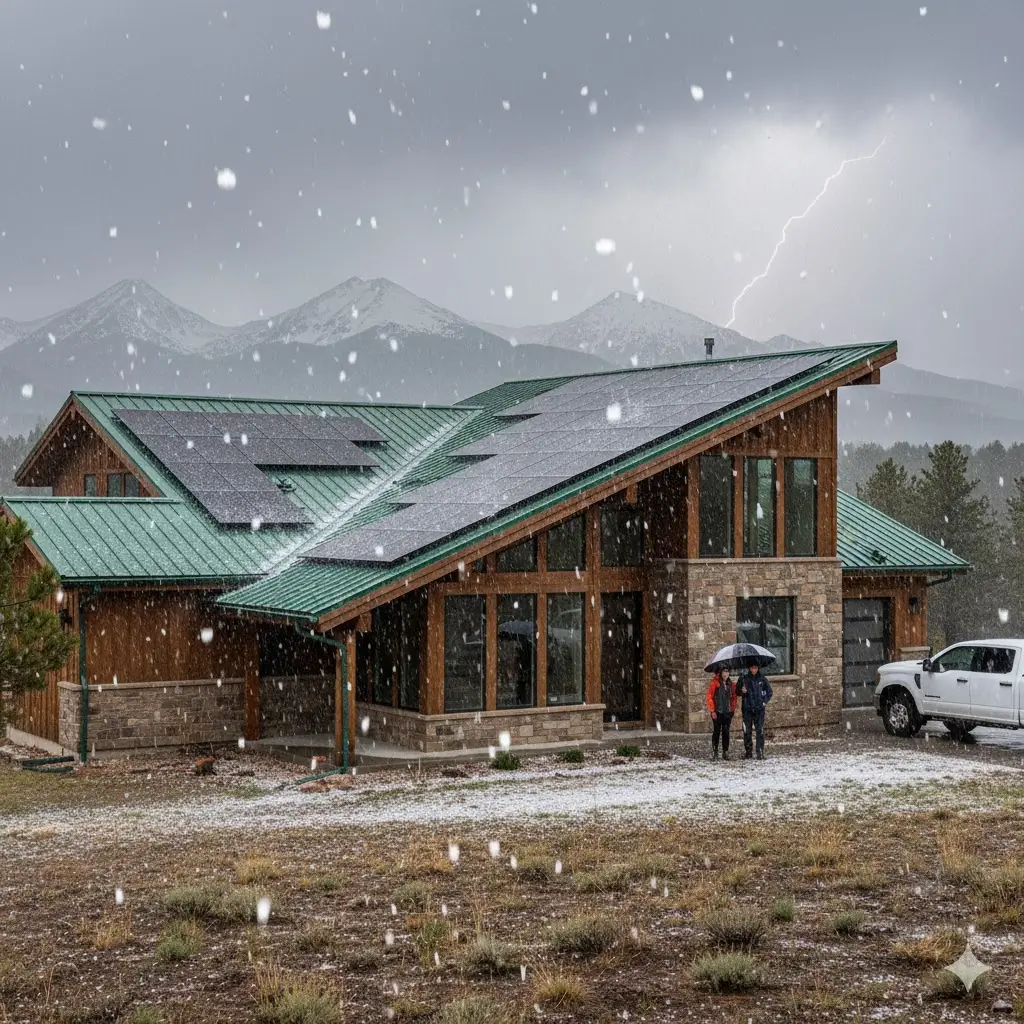
Even though rare, hail damage on solar panels can still happen. This is especially true during unusually severe storms. Here are a few signs to watch for:
If you notice any of the above, contact your local installer for an inspection. Early detection makes repairs easier and protects your overall system performance.
One of the best ways to safeguard your system is through warranties and insurance. Most manufacturers offer a 25-year warranty that covers performance and some physical damage. However, not all warranties include weather-related issues, so read the fine print.
Homeowner’s insurance often treats solar panels as part of your roof, which means hail and solar panels may already be covered under your existing policy. Double-check with your provider to confirm coverage before installation.
A quality solar company will also ensure your panels are installed in accordance with local building codes, including requirements for wind and snow loads. This is essential in a place like Colorado Springs.

There’s no denying it - solar panels and hail storms can coexist. Thanks to technological advances, most panels are strong enough to stand up to Colorado weather. And with proper planning, installation, and protection, your system will keep performing for decades to come.
If you’re thinking about solar and want peace of mind that your system can handle what Colorado Springs weather throws at it, get in touch. Our team can help you find the right solution for your home and budget, backed by experience and local expertise.
Powered by Healthy Digital | Privacy Policy
Proudly Serving, Denver, CO, Colorado Springs, CO and surrounding areas.